
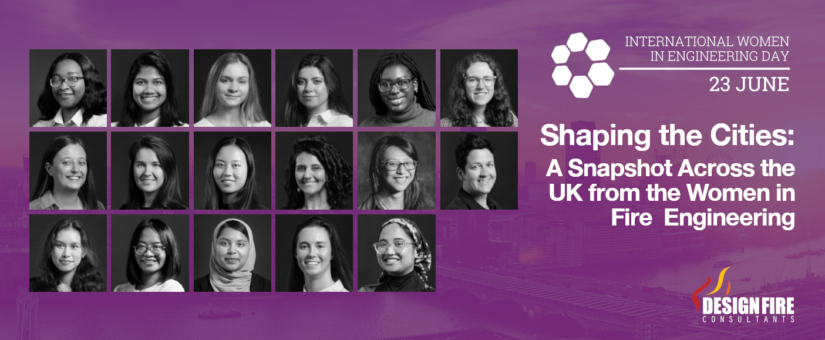
INWED 2026 – Shaping the Cities: A Snapshot Across the UK from the Women in Fire Engineering
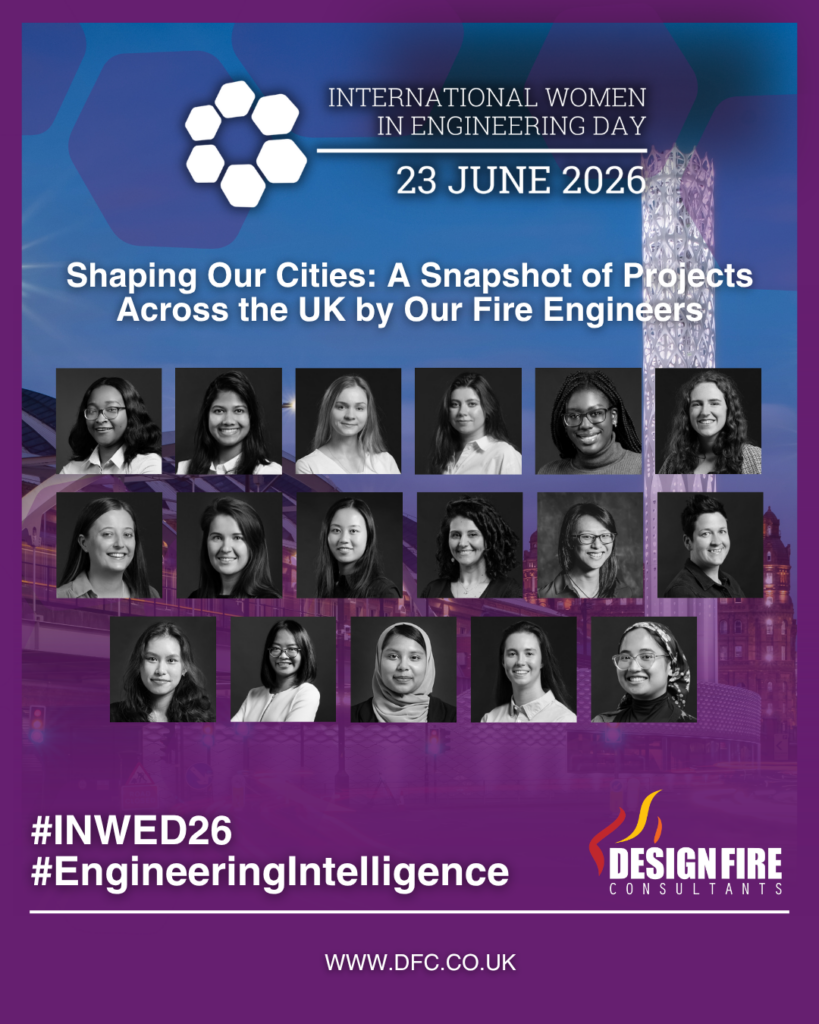
To mark International Women in Engineering Day (INWED) 2026, we’re building on our Shaping the City theme by taking a wider look at the projects our fire engineers are helping to shape across the UK. With contributions from our teams in Birmingham, Leeds, London, Manchester, and Sheffield, this blog brings together a series of short project snapshots that highlighting the role fire engineers play in shaping safe, functional buildings and communities. These reflections provide an insight into the variety of projects our engineers are involved in and the contribution we make as part of wider design teams across the UK.
Birmingham
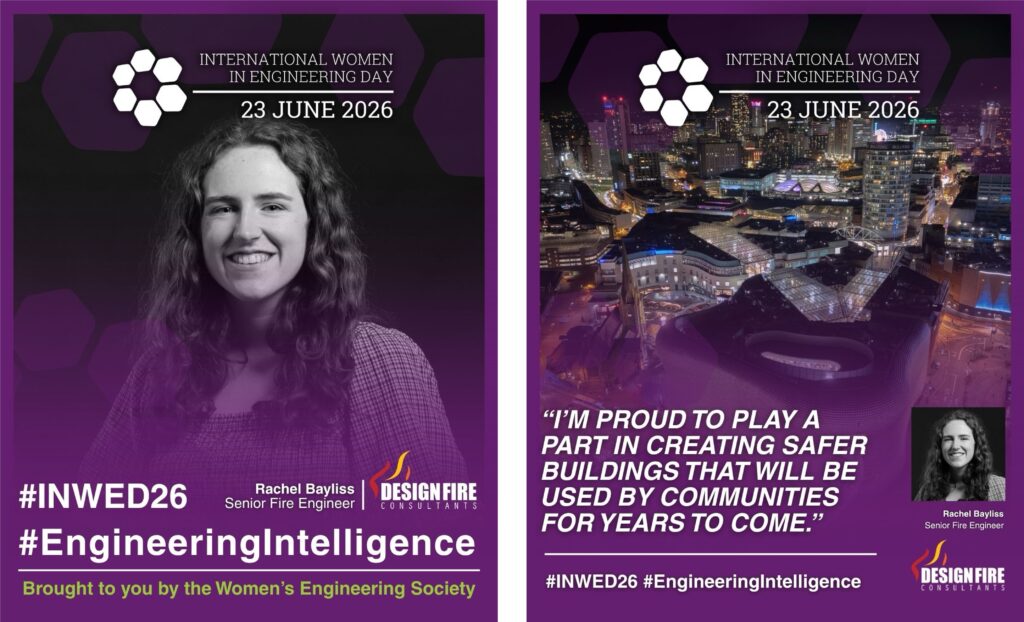
By Rachel Bayliss, Senior Engineer
To mark INWED 2026, it feels like a good moment to reflect on the work I’ve been involved in across the Midlands since joining DFC in September and what I enjoy about working as a fire engineer.
My role as a fire engineer has given me the chance to work across a range of projects, including residential, commercial and healthcare schemes. Recently, this has included projects such as St George’s in Wolverhampton and Greyfriars in Northampton, both redevelopment schemes contributing to the wider regeneration of these city centres. I have enjoyed working on these as they are projects that should make a difference to local communities in the Midlands.
Another aspect of my job I enjoy is the variety of projects, working on different building types and with different project teams means there’s always something new to learn and no two days or projects look quite the same.
Throughout my career as a fire engineer, I’ve been involved in different stages of projects, from early design discussions through to construction, as well as working on existing buildings and managing fire safety within them. Working across sectors and project stages has helped me understand how fire engineering strategies need to be carefully tailored to each building, rather than taking a one‑size‑fits‑all approach.
I also really value the collaborative side of the role. Working closely with colleagues and being part of design teams that are shaping safer buildings for people to use every day, is one of the most rewarding parts of the job.
Leeds
By Weimiao Lu, Associate
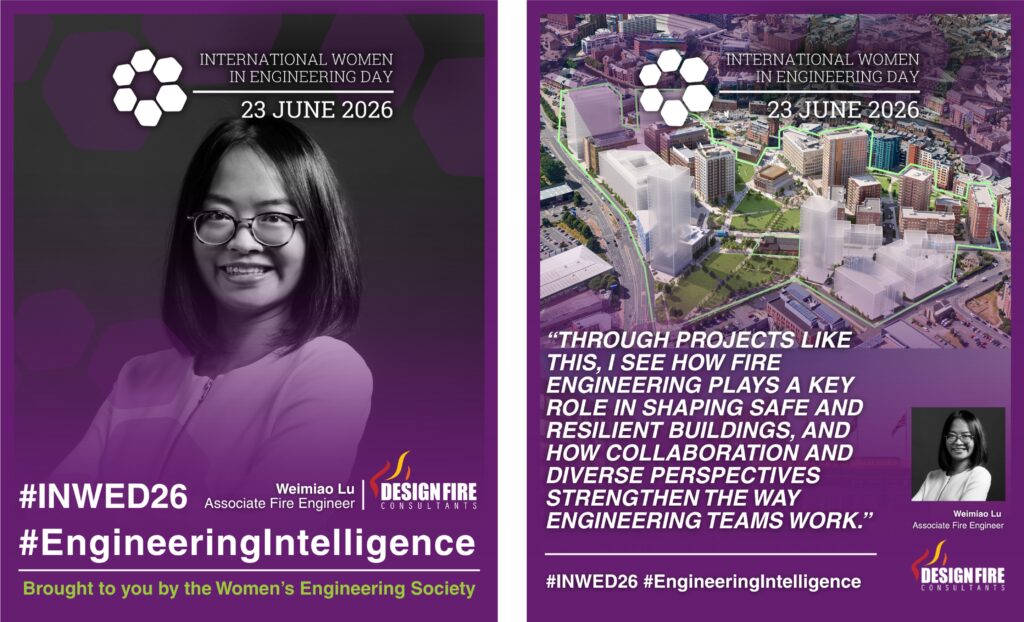
Being involved in complex regeneration projects is a key part of my role, where fire engineering plays an important part in shaping how developments come together. As part of INWED, I’m sharing my experience of leading the fire strategy on the Aire Park development in Leeds.
The Aire Park development is a major transformation of a former industrial site in Leeds into a mixed-use neighbourhood centred around a new public park. It brings together a wide range of buildings and uses, alongside the retention of historic elements such as the former brewery headquarters, within a dense urban setting.
As the lead fire engineer, I’ve been involved in developing and coordinating the fire strategy across multiple phases. The scale and complexity of the scheme has required a clear and considered approach, working closely with the wider design team and stakeholders to bring different requirements together into a cohesive strategy.
A key part of the role has been balancing consistency across the wider development while responding to the specific needs of individual buildings. This has involved close collaboration, clear communication and a practical approach to ensuring the design works as a whole.
Seeing the project progress on site has been particularly rewarding. Being involved from the design stages through to delivery across a project of this scale gives a real sense of contributing to how this part of the city will develop and be used in the future.
London
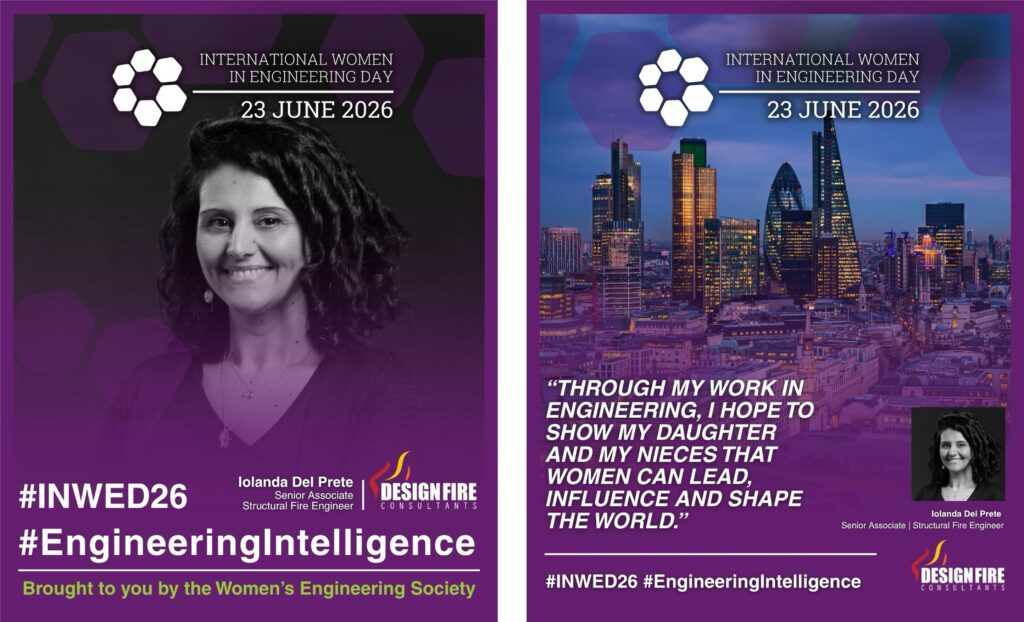
By: Iolanda Del Prete, Senior Associate | Structural Fire Engineer
To mark INWED 2026, I am proud to reflect on my journey as a woman in a leadership role within engineering.
As a structural fire engineer, I have had the opportunity to work on complex projects across London, helping to shape our built environment safer and more resilient. Knowing that my work has played a part in the city’s development is a source of great professional pride.
Moving to Battersea marked a particularly meaningful stage in my career, allowing me to work on important local projects that I now experience in everyday life. I enjoy visiting these spaces with my family, using them and sharing stories about the work behind them. It is rewarding to see how engineering directly influences the places where communities live, gather and grow.
Alongside project work, I am passionate about supporting younger colleagues as they develop their careers. Mentoring and helping shape the next generation of engineers is a responsibility I take seriously and find deeply fulfilling.
At home, I am conscious of the example I set for my children. Being a role model, especially for my daughter and my nieces. It means showing them that women can lead, influence and shape the world through engineering.
Manchester
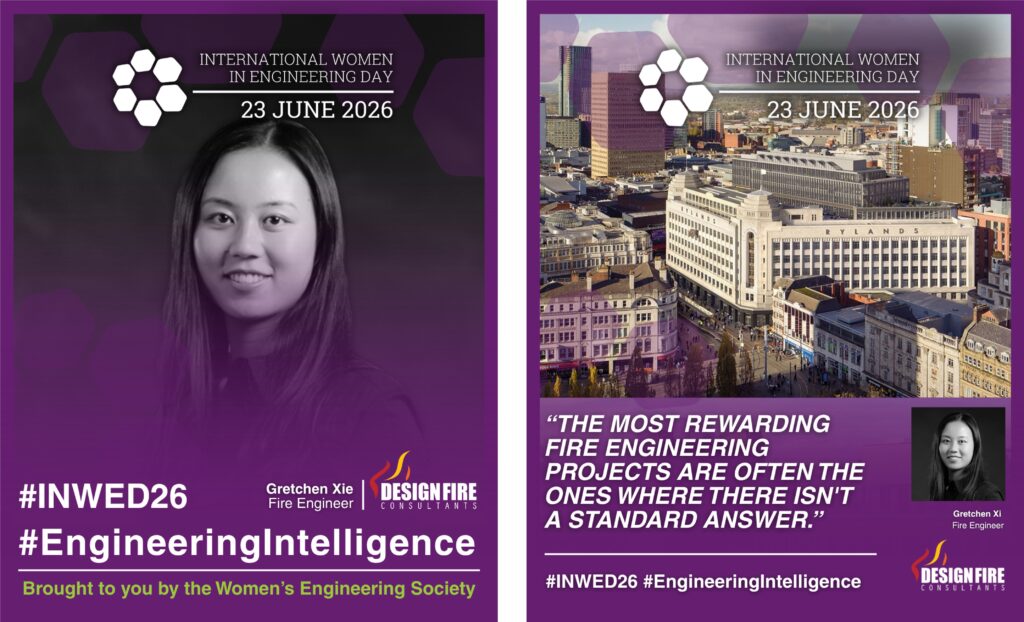
By Gretchen Xie, Fire Engineer
As part of this year’s INWED, I’m reflecting on my involvement in the transformation of Rylands, one of Manchester’s most iconic buildings.
Rylands is a major refurbishment and extension project in Manchester, transforming a historic department store originally built between 1928 and 1930 into a mixed-use development with retail, leisure and office spaces.
I’m working on the project as the project fire engineer, providing both fire strategy and structural fire engineering support throughout the design and construction stages.
One of the most interesting aspects of the project has been working with an existing historic building. Unlike many new-build developments, older buildings rarely fit neatly within modern guidance. Existing construction details, heritage constraints, buildability challenges and incomplete records often require a more bespoke, performance-based solutions rather than prescriptive approaches.
The project involves a wide range of unique fire engineering challenges, from assessing the fire performance of existing structural elements and historic materials to developing practical solutions for building features that could not simply be replaced or rebuilt. Throughout the project, the aim has been to retain the character and heritage value of the building while achieving an appropriate level of fire safety and supporting the wider project goals.
What I’ve enjoyed most about working on this project is the opportunity to combine technical analysis with practical problem-solving. It has shown how fire engineering can help unlock solutions for complex buildings where standard guidance alone isn’t always suitable. As a woman in engineering, projects like Rylands have helped build my confidence and demonstrate the impact engineers can have on complex real world challenges. It has been particularly rewarding to contribute to the transformation of one of Manchester’s iconic buildings while continuing to develop my technical and professional skills alongside a supportive team.
Manchester
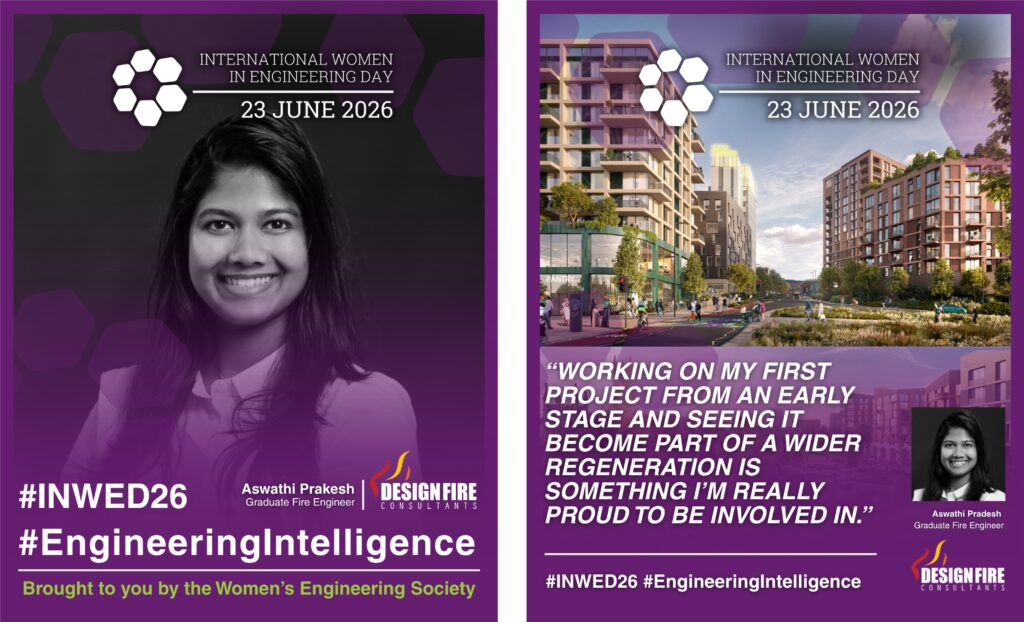
By Aswathi Prakesh, Fire Engineer
Prince’s Gate was my first project at DFC, forming part of the wider regeneration of Oldham town centre. The £31.5m residential-led scheme, located next to the Oldham Mumps Metrolink station, will deliver 331 new homes across three residential blocks in two phases.
I joined the project at an early stage (RIBA Stage 2) as a project fire engineer, supported by Ross, an Associate at DFC. Coming straight into a live scheme of this scale was a great opportunity and it really helped bring everything I had learned into practice. Ross’s guidance was invaluable in helping me build my understanding and confidence as I became more involved in the design.
Working on a project like this also gave me my first real insight into the difference between High-Risk Buildings and lower-rise developments and how that plays out in practice rather than just in guidance.
The scheme includes two linked towers, which are classified as a High-Risk Building, alongside a third building under 18m in height. As a result, the project is progressing through different approval routes. Being involved in both has made it a really valuable and practical learning experience.
What has stood out most is being part of a project that goes beyond the building itself and being involved from an early stage. Knowing that Prince’s Gate is part of a wider regeneration of Oldham has made it feel like I’m contributing to something much bigger as the design continues to develop. As my first project at DFC, it’s something I’m really proud to be part of.
Sheffield
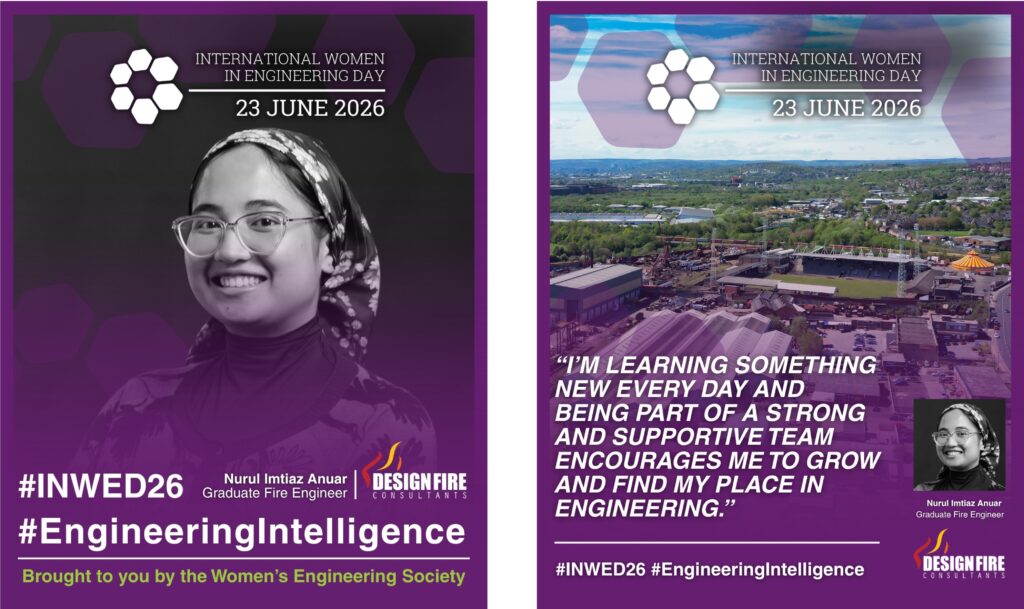
By Nurul Anuar, Fire Engineer
One of my most recent project is a processing facility project which manufactures paper-based packaging. This involved the extension of an existing warehouse and a retrofit of the adjacent building.
I worked on the project as a fire engineer, supported by Weimiao, an Associate at DFC, whose support make a real difference throughout the design stages. It gave me the chance to build my experience while being involved in the early stages of the project all the way to tender.
The work also required us to think beyond life safety, taking into account taking into account the wider needs of the building and its users. This helped me better understand how fire engineering fits into the wider needs of a project and the client.
This project is one of the many projects where I’ve had the opportunity to collaborate across teams and offices. Throughout these experiences, I’ve had the opportunity to learn from a range of experienced engineers, including senior female colleagues, which created a really supportive and encouraging environment.
Experiences like this have been important in building my confidence and show how much you can develop through working alongside others and being part of a strong, collaborative team.
Sheffield
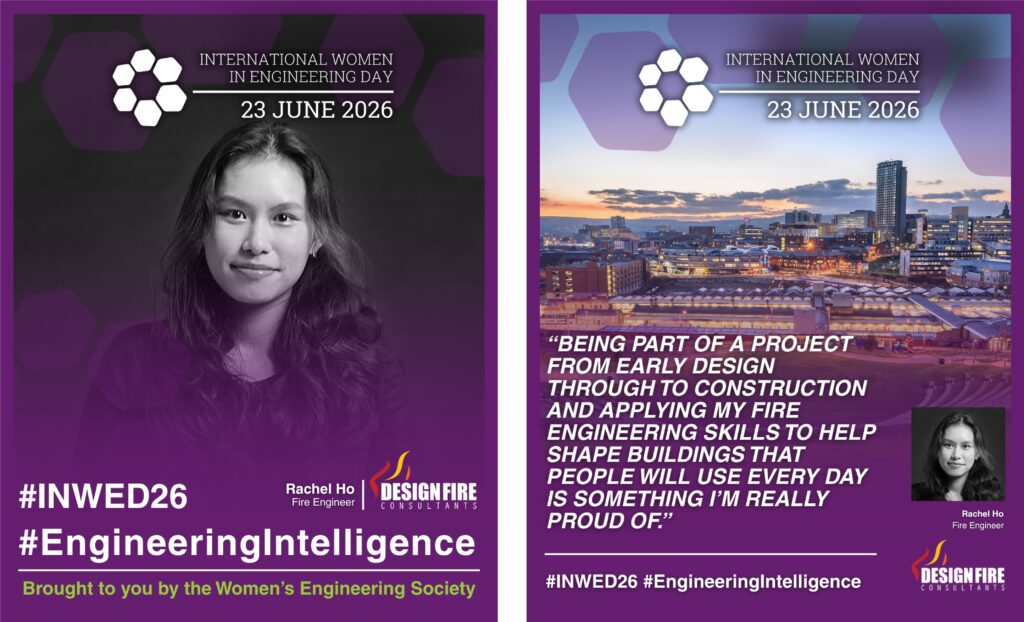
By Rachel Ho, Fire Engineer
The Prestwich Village Masterplan was one of the first major projects I worked on after joining DFC. The £100m redevelopment includes a mix of retail, leisure and residential buildings, delivered across multiple phases and connected by a new public space at its centre.
I first became involved in the project as a Graduate Engineer, working closely with Gareth (CEng, Senior Associate) and Gretchen (Engineer) during the early design stages of Phase 1, to support the development of fire strategies. It was a great introduction to applying fire safety guidance across different building types and understanding how these design decisions come together on a live project, particularly in applying relevant standards to developments with varying uses.
As the project has progressed, so has my role. I now lead on Phase 2, supported by a Graduate Engineer, with Gareth continuing to provide guidance on oversight as a Chartered Engineer.
The transition from a supporting role to leading the project has been both challenging and rewarding. Along the way, I’ve been able to build not only my technical knowledge but also confidence in managing projects and working closely with the wider design team, particularly architects.
Visiting the Prestwich Travel Hub site earlier this year and seeing the project evolves from early-stage design through to construction has been a very proud moment. Having been involved from the early stages through to delivery has given me a strong sense of ownership and pride in the project. I’m looking forward to seeing it continue to take shape over the coming phases towards its full completion.
- Posted by Design Fire Consultants
- On 22nd June 2026

0 Comments