
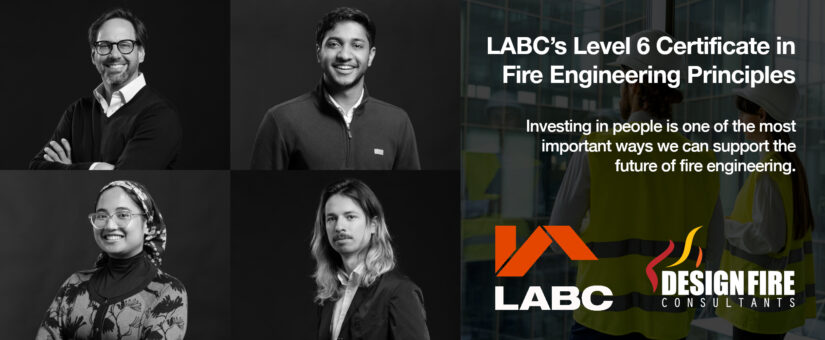
DFC Invests in Future Fire Engineering: LABC’s Level 6 Certificate in Fire Engineering Principles
Developing competent fire engineers requires more than project experience alone. It relies on continual learning, collaboration and exposure to different perspectives from across the built environment.
DFC Associate Director Florian Block was recently invited to share his expertise as a specialist lecturer in Structural Fire Engineering. He will be teaching as part of the Level 6 Certificate in Fire Engineering Principles, a prestigious qualification developed by the Local Authority Building Control (LABC) alongside leading industry and academic partners.
The 11.5-day course is delivered over five months and was developed in response to Recommendation 18 of the Grenfell Tower Inquiry Phase 2 Report, which called for government, industry and professional bodies to work together to develop training in fire engineering principles for construction professionals and Fire and Rescue Service personnel.
The programme brought together participants from a variety of backgrounds, including building control, fire and rescue services, fire engineers and other construction professionals. This diversity of perspectives was a recurring theme in the experiences shared by the DFC attendees. Florian was among the specialists invited to contribute to the course, sharing his expertise in structural fire engineering alongside other leading practitioners from industry and academia.
Through DFC’s involvement in the programme, three members of our team were given the opportunity to attend the course. Aman Vora, Nurul Anuar and Andy Caba joined professionals from across the fire safety and construction sectors, broadening their knowledge and gaining insight from a diverse range of industry perspectives.
In their own words, Aman, Nurul and Andy reflect on what they gained from the experience and how it has influenced their understanding of fire engineering.

“The LABC course was a great learning opportunity that helped me consolidate my understanding of fundamental fire engineering principles. The content was informative and engaging, providing valuable insight into the regulatory requirements that shape fire safety design.
The most rewarding aspect of the course was the opportunity to hear from highly respected professionals across the industry. Their expertise, real-world experience and perspectives on current challenges and developments made the course particularly unique and valuable.
The programme also gave me a much greater appreciation of the role and expectations of Building Control throughout the design and approval process. Understanding these perspectives will undoubtedly help me become a more effective fire engineer.
Beyond the technical knowledge gained, the programme reinforced the importance of clear communication, regulatory compliance and multi-disciplinary collaboration in delivering safe and successful projects. I am grateful for the opportunity to participate and would like to thank both DFC and LABC for providing such a valuable learning experience.”
“The course provided a comprehensive overview of the various elements that contribute to fire engineering, giving me a clearer understanding of the profession and the wider industry as a whole.
One of my key takeaways was the importance of grasping the broader context in which fire engineers work. In particular, I learned how crucial it is to consider the range of audiences who need to read and comprehend the fire strategies we produce. This has undoubtedly encouraged me to place even greater emphasis on clarity when preparing my own reports. The real-life experiences shared by industry professionals provided valuable insight into what good fire engineering looks like in practice, from design through to project completion and handover.
Moreover, the people attending the course made just as much of an impact on me. It brought together a diverse group of professionals, including local building control officers, fire and rescue services personnel, and fire engineers, all of whom were willing to share their experiences and perspectives. As part of my graduate journey, this was an invaluable experience. It highlights DFC’s commitment to supporting early-career professionals, as well as LABC’s dedication to encouraging collaborative learning across the built environment industry.”
“The LABC course was a fantastic learning opportunity, covering many of the key areas within fire engineering. Some topics were more familiar than others through my work experience, but every session was very informative.
The lectures were delivered by a range of experienced fire engineers and fire safety professionals, including some familiar faces! It was a full-circle moment to find myself, for the seventh year in a row, attending a lecture prepared by Dr Angus Law. Each lecture was supported by real-life examples and case studies that demonstrated how theory is applied in practice, highlighting what good outcomes look like whilst also sharing lessons learned from past challenges.
I learned a great deal about a range of subjects, including smoke control systems, QDRs and structural fire engineering, among others. The session on fire safety in heritage buildings was particularly interesting and highly relevant to one of my projects, giving me the opportunity to apply some of the ideas while they were still fresh in my mind.
Lastly, it was really interesting to gain a greater understanding of the perspectives of those working in Building Control and how they approach fire safety challenges. It will come in handy on many projects in the future, I am sure. Overall, it was an educational and rewarding experience, and I’d like to thank both DFC and LABC for providing this opportunity.”
Reflecting on the opportunity, Florian said:
“When the opportunity arose to contribute to the qualification, I felt it was important to create a learning opportunity for others as well. Fire engineering is a profession built on sharing knowledge and learning from those around us. By securing places for our engineers, I hoped to give them exposure to a wide range of perspectives from across the industry and support their continued professional development.”


The experience reflects DFC’s long-standing commitment to professional development. Alongside structured mentoring, internal and external CPD programmes, lunch-and-learn sessions, support for the Institution of Fire Engineers (IFE) membership and professional registration, DFC continues to invest in opportunities that help engineers develop throughout their careers.
As the fire engineering profession continues to evolve, maintaining competency and encouraging lifelong learning remain essential. By supporting opportunities such as this, DFC aims to help its engineers broaden their technical knowledge, strengthen professional skills and contribute to creating safer buildings and communities.
For more information about the course, visit: Level 6 CIOB Certificate – Fire Engineering Principles (Fire Service)
- Posted by Design Fire Consultants
- On 1st July 2026
0 Comments