
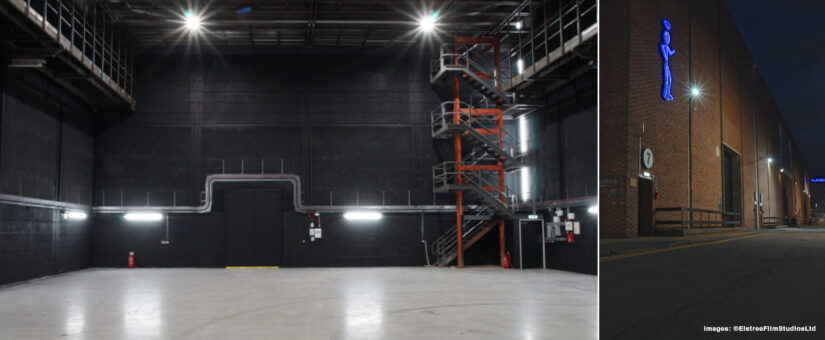
A New Chapter for Elstree Studios’ Historic Stages
By: Iain Macfarlane, Director
From blockbuster films to award‑winning television, Elstree Studios has long been part of the UK’s screen industry. As the site enters its second century, Design Fire Consultants (DFC) was appointed to support the reopening of Stages 7, 8 and 9, bringing these historic spaces back into use while ensuring they meet modern fire safety requirements.
Elstree Studios in Borehamwood has been home to some of the most recognisable titles in film and television – from classics linked with the Star Wars era through to modern hits like The Crown. Film production on the site goes back to the 1920s, when John Maxwell renamed the facility ‘British International Pictures’ and signed an up‑and‑coming director called Alfred Hitchcock; his film Blackmail, made at Elstree, is widely credited as the first British talking picture.
Over the decades Elstree has helped launch the careers of actors such as Charles Laughton and Laurence Olivier, contributed to wartime morale with performances at the on‑site Garrison Theatre, and provided the backdrop for films like The Dam Busters in the 1950s. More recently, it has hosted The King’s Speech, Paddington, Strictly Come Dancing and Netflix’s multi‑award‑winning drama The Crown.
Within that wider story, Stages 7, 8 and 9 have played their own part:
- Stage 7 has hosted Indiana Jones and the Raiders of the Lost Ark, The Dark Crystal, Superman IV and The Crown;
- Stage 8 has seen Star Wars: Return of the Jedi, Flash Gordon and Indiana Jones and the Temple of Doom; and
- Stage 9 is remembered for The Shining, Star Wars: A New Hope, Labyrinth and The Great Muppet Caper.
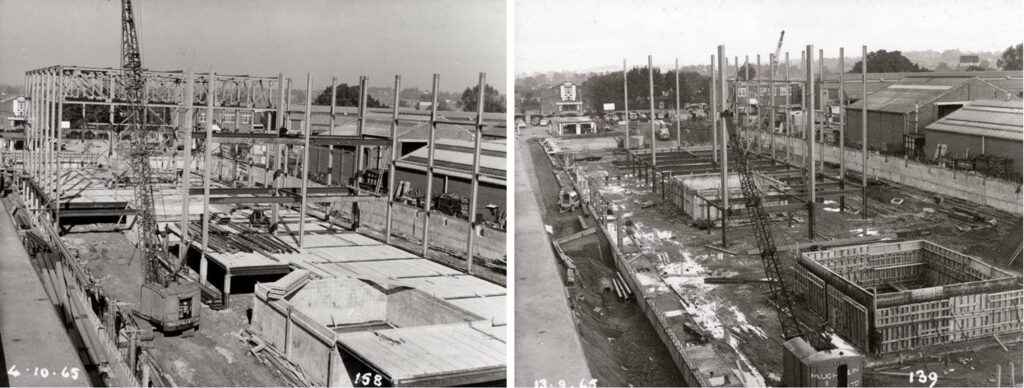
After being closed for several years, and almost set for being demolished, Stages 7, 8 and 9 were officially reopened in September 2025 as part of Elstree’s centenary celebrations. That reopening came at a pivotal moment for the wider studio too, with Hertsmere Borough Council-owned Elstree Film Studios announcing a new partnership with The MBS Group, the global studio operator, to preserve the site’s heritage while modernising operations and taking Elstree into its second century. Together, those moves underline a clear ambition: to keep one of Britain’s most historic studio campuses active, adaptable and relevant for the future.
DFC was appointed to help ensure that this group of historic buildings could continue to operate safely as a modern studio campus. Rather than starting again, the project has focused on bringing Stages 7, 8 and 9, the Andrew Mitchell Building, the Ancillary Block and the basement car park back into reliable day‑to‑day use. The aim has been to respect a site with over a century of film heritage while making sure it works for contemporary productions, audiences and staff.
Fire Safety as a Tool for Preservation
DFC’s role has been to use fire engineering as a tool for preservation rather than as a trigger for demolition. Looking at the stages, offices, walkways and basement as one connected site, DFC developed a combined fire strategy that sets out what needed to change during the refurbishment work so that these spaces can be used confidently for the next generation of productions. With extensive experience in film and TV environments, DFC understands that studios need rapid changeovers between productions, flexible sets and support for everything from single‑camera drama to large‑scale entertainment shows.
Key elements of the updated strategy included:
- Introducing a modern, interlinked fire detection and alarm system across the stages, offices, walkways and basement to give clear, early warning wherever a fire might start and to support a straightforward evacuation strategy.
- Reviewing how people move through the complex – from event spaces and offices to stage floors and gantries – and aligning room capacities and escape routes with that reality, rather than relying only on standard floor‑area assumptions.
- Finding ways to keep distinctive features like high stage volumes, gantry access and covered walkways while still meeting today’s expectations for safety, using performance‑based reasoning where the existing layout did not fit neatly within prescriptive guidance.
The result is a set of buildings that feel familiar to those who know Elstree, but with the reassurance that, with DFC’s input, they now operate to modern fire‑safety standards.
Spaces for Talent, Not Just Technical Space
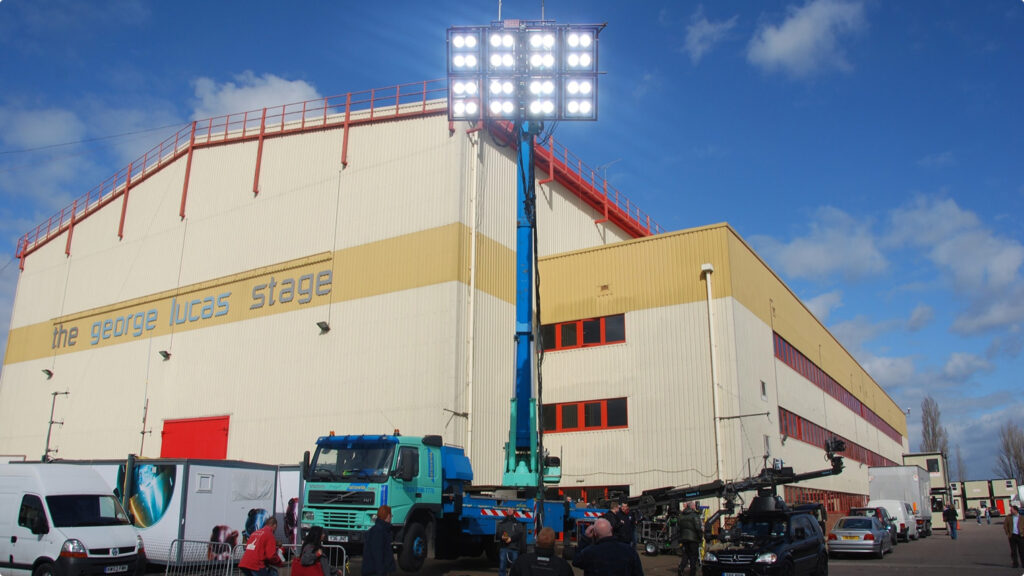
Alongside the stages themselves, the supporting buildings are crucial to how productions work day-to-day. The Ancillary Block houses much of what audiences never see but every production depends on: changing facilities for cast, make‑up and costume areas, and a vintage screening room that keeps a tangible link to the site’s long history as a place to watch rushes and review work in progress. The Andrew Mitchell Building provides offices, a café and an event hall, giving productions and visitors a more public‑facing hub connected back to the stages by covered walkways.
DFC’s strategy ensures that these talent‑focused spaces are fully integrated into the overall fire and evacuation approach, so that movement between dressing rooms, make‑up, screening spaces and stages is safe and straightforward. That integration allows productions to configure and re‑configure support spaces around each set’s needs without reopening the fundamentals of the building strategy every time.
Sustainability Through Reuse, Not Rebuild
There is a strong sustainability story behind this approach. Every building that stays in use avoids the carbon cost and disruption of demolition and new construction. At Elstree, DFC’s strategy supports retaining the existing stage block, the office buildings and the 4,800‑square‑metre basement car park, and upgrading them where it counts instead of replacing them wholesale.
Simple, robust solutions – such as using natural ventilation in the basement and keeping the walkways as open, external routes – were selected and justified by DFC to avoid unnecessary plant and new structure. In practice, the project shows that you can take an ageing, intricate studio site and make it safe and workable without wiping away history.
Ready for Whatever Comes Next
Elstree has always thrived on variety: feature films, high‑end drama, entertainment shows and live audience recordings have all passed through these stages, from The Railway Children and Star Wars in the 1970s to The King’s Speech, Paddington and The Crown in more recent years. That mix is only likely to broaden as Elstree enters this new phase with MBS, whose network spans more than 650 sound stages worldwide and nearly 1,000 high‑end productions a year. DFC’s strategy is designed to support that variety rather than limit it, giving the site a robust safety framework while leaving room for productions to programme each stage and its support spaces according to their own creative and technical needs.
The “base” buildings now provide a safe, flexible canvas, while each incoming production or operator develops its own fire plan for how it uses the space, building on the framework DFC has set out. That balance between clear rules and creative freedom is what allows historic soundstages and support buildings to stay in front‑line use – protecting more than 100 years of film heritage by keeping it working, not turning it into a museum piece.
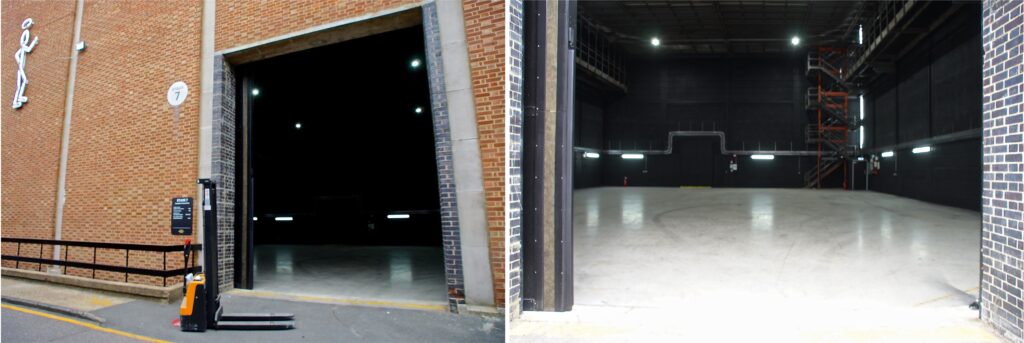
Copyright: Feature image and images this page courtesy of Elstree Film Studios (EFS)
- Posted by Design Fire Consultants
- On 2nd July 2026
0 Comments