

Bridging Theory and Practice: My Experience as a Fire Engineering Apprentice
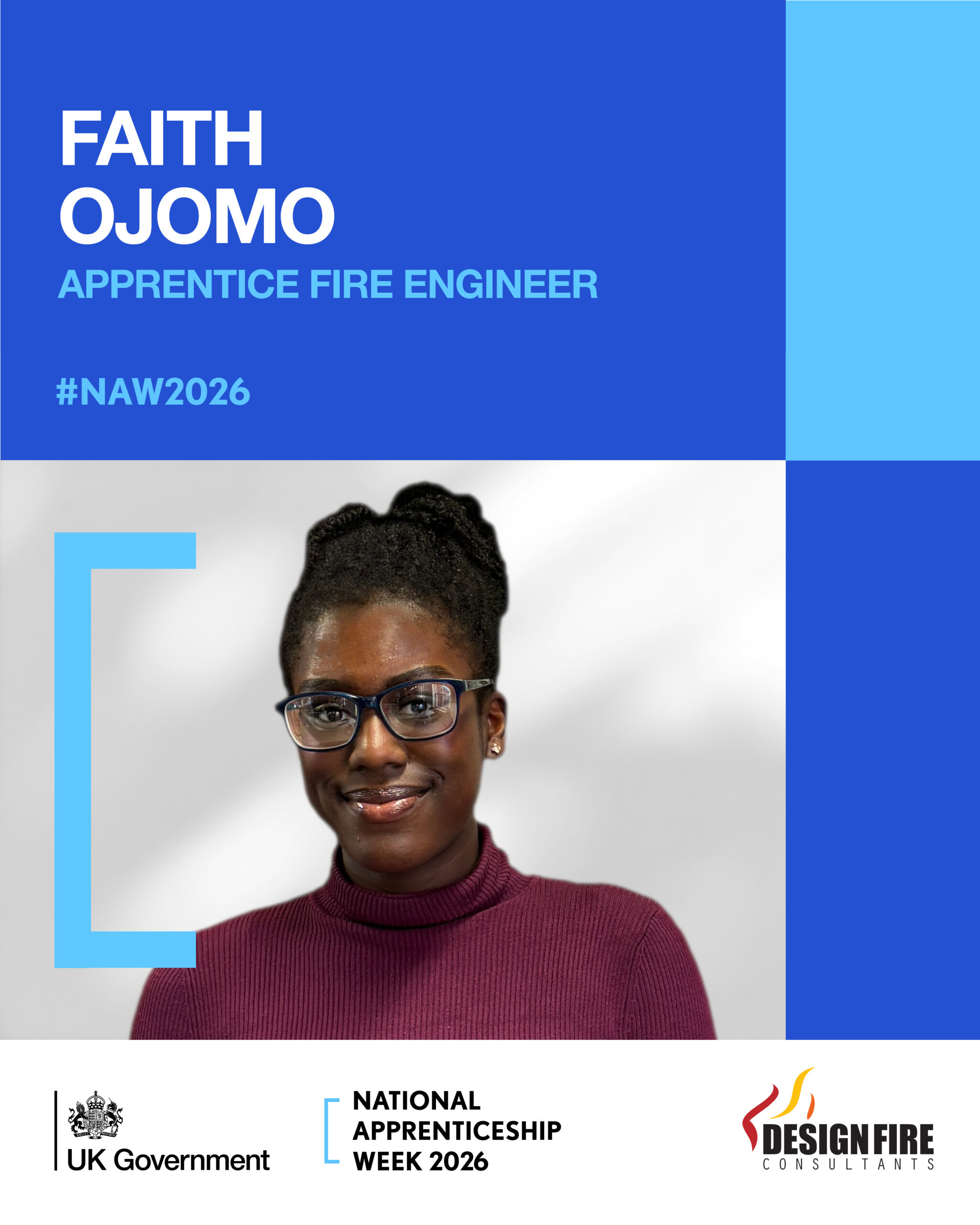
To mark National Apprenticeship Week, we’re sharing another insight into life at DFC, this time from Faith, who joined us as an Apprentice Fire Engineer in 2024 and is currently studying for a BEng in Fire Engineering at the University of Lancashire. Here, Faith talks about her journey so far:
When I first considered my career path, I knew I wanted something that combined technical challenge with real-world impact. Fire engineering offered exactly that, a field where every project contributes to protecting lives and property. What I didn’t anticipate was how much an apprenticeship would accelerate my learning, allowing me to develop practical skills while building a solid theoretical foundation.
Why an Apprenticeship?
Choosing the apprenticeship route wasn’t just about gaining qualifications; it was about immersing myself in the industry from day one. At DFC, I’ve had the opportunity to work on real projects that affect how buildings are designed and how people stay safe. The “learning by doing” approach has been invaluable. The concepts that might seem abstract in a textbook suddenly make complete sense when you’re applying them to an actual design.
Balancing Work and Study: Two Sides of the Same Coin
One of the most frequent questions I get is: “How do you balance working full-time and studying?”
The truth is, they complement each other beautifully. When I’m studying fire dynamics or learning about fire protection systems in my studies, I can immediately relate it to projects I’m involved in at DFC. Conversely, when I encounter a challenging aspect of a project at work, I can dive deeper into the theory during my study time to truly understand the why behind the how.
Yes, it requires discipline and time management but having supportive colleagues and a structured learning environment makes all the difference.
Hands-On Experience: From Theory to Practice
At DFC, I’ve been fortunate to work on diverse projects spanning design development and structural fire engineering. Each project brings its own set of challenges and learning opportunities:
Design Development Projects
I’ve been involved in developing fire strategies for various building types, from residential developments to commercial spaces. This work has taught me how to consider fire safety from the earliest stages of design. I’ve learned to evaluate means of escape, compartmentation mark-up and the selection of appropriate fire protection systems.
Structural Fire Engineering
Working on structural fire engineering projects has been particularly eye-opening. Understanding how different materials and structural elements respond to fire and how to design for appropriate levels of fire resistance, requires both analytical thinking and practical judgment. I’ve gained hands-on experience with fire resistance calculations and learned how to work with structural engineers to develop solutions that are both safe and cost-effective.
The Critical Importance of Regulatory Compliance
One of the most valuable lessons I’ve learned is that fire engineering isn’t just about technical calculations. It’s fundamentally about compliance, safety and responsibility. Working with building regulations, approved documents and various British Standards has shown me that every design decision must be defensible and compliant.
I’ve learned to navigate complex regulatory frameworks, understanding not just what the regulations say but why they exist. This has given me a deeper appreciation for the role fire engineers play in the built environment. We’re not just consultants; we’re guardians of public safety.
Learning from the Best: Collaboration with Experienced Engineers
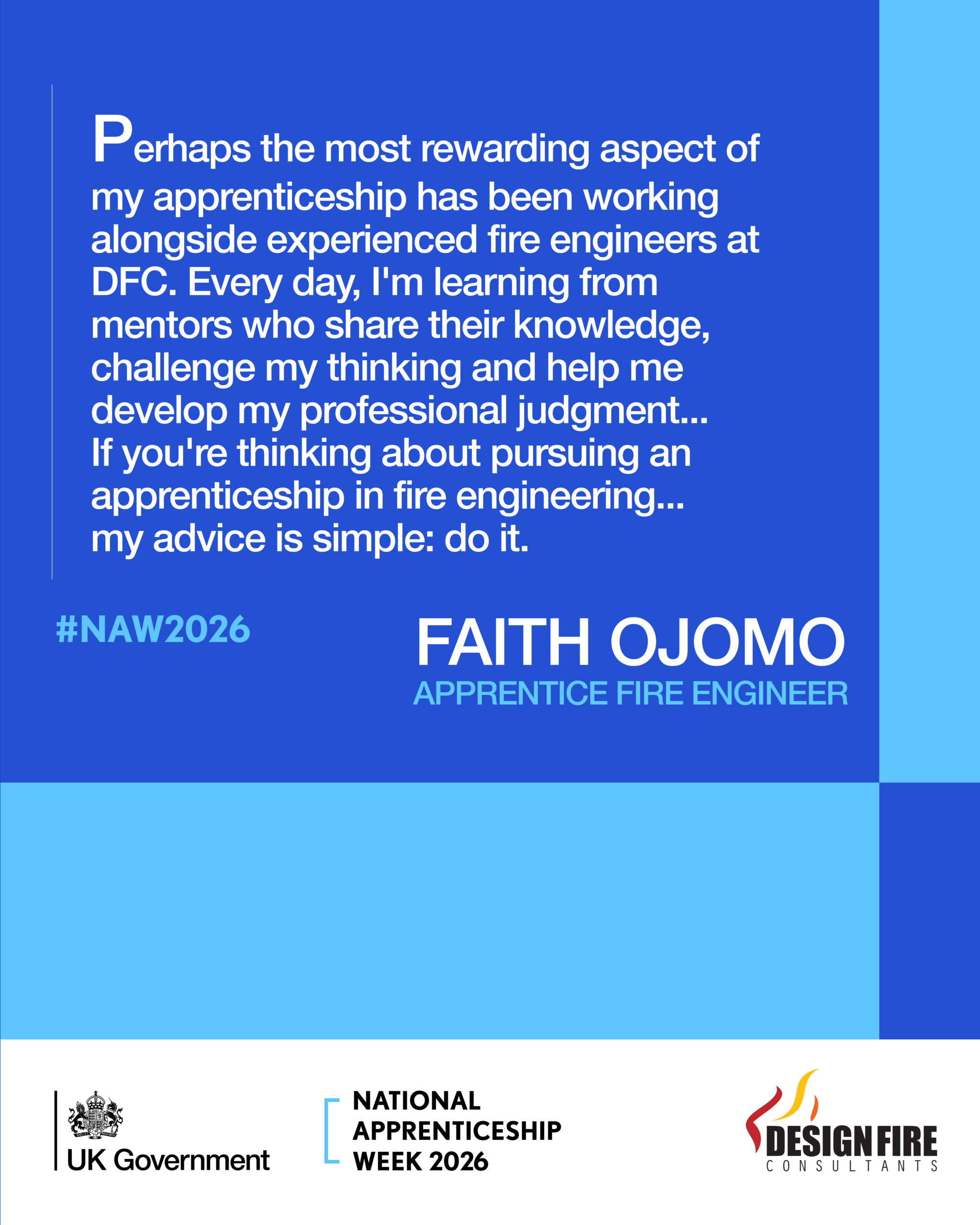
Perhaps the most rewarding aspect of my apprenticeship has been working alongside experienced fire engineers at DFC. Every day, I’m learning from mentors who share their knowledge, challenge my thinking and help me develop my professional judgment.
Whether it’s reviewing my calculations, discussing design approaches or explaining the nuances of a particular regulation, these interactions have been invaluable. I’ve learned that engineering isn’t a solitary pursuit, it’s a collaborative effort where diverse perspectives lead to better solutions.
Some of my key takeaways from these collaborations include:
- Attention to detail matters: Small oversights can have significant consequences in fire safety
- Communication is crucial: Being able to explain technical concepts to clients, architects and contractors is just as important as the technical work itself
- Stay curious: The field is constantly evolving with new materials, technologies and regulations
- Think holistically: Fire safety isn’t isolated, it intersects with architecture, structures, MEP systems, and building operations
Skills I’m Developing
Through my apprenticeship, I’m building a diverse skill set:
- Technical competencies: Fire dynamics, fire resistance design, smoke control, CFD modelling, structural fire engineering
- Software proficiency: Various fire engineering and modelling software tools
- Regulatory knowledge: Building regulations, British Standards, and fire safety legislation
- Professional skills: Project management, client communication, report writing, and presenting technical information
- Problem-solving: Developing creative solutions to complex fire safety challenges
Looking Ahead: My Future in Fire Engineering
Long-term, I aspire to become a chartered engineer, contributing to the advancement of fire engineering practices and perhaps mentoring future apprentices myself.
If you’re thinking about pursuing an apprenticeship in fire engineering or any technical field, my advice is simple: do it.
You’ll gain practical experience that fast-tracks your career development, build a professional network from day one, earn while you learn, and develop both technical and soft skills that will serve you throughout your career. Most importantly, you’ll be contributing to meaningful work from the start. The journey isn’t always easy, balancing work, study and personal life requires commitment. But the rewards are immense and the skills and experiences you gain are invaluable.
- Posted by Design Fire Consultant
- On 13th February 2026

0 Comments