
Are We Armouring the Wrong Part of the Plane?
Using the wartime aircraft analogy as a starting point, this thought piece considers how survivorship bias may influence the way we think about fire safety. Are we directing attention towards the places that present the greatest risk, or are some buildings escaping scrutiny because they have not yet been associated with a major incident? The answer has important implications for building owners, regulators and those responsible for making decisions about risk.
By Iain Macfarlane, Director
Survivorship Bias and the Fire Safety Agenda
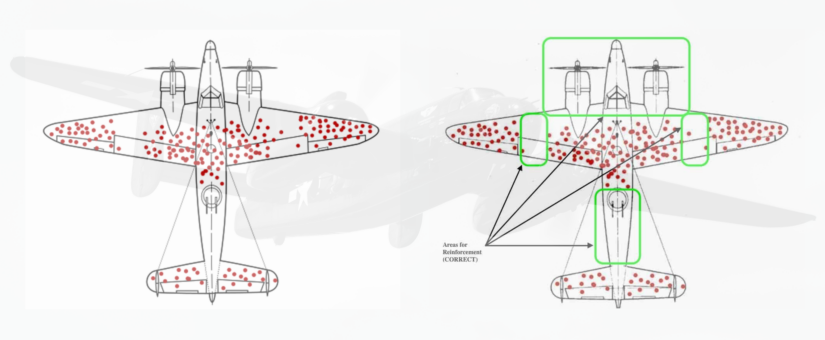
In 1943, the US military had a problem. Bombers were coming back from raids over Europe riddled with bullet holes and commanders wanted to know where to add armour. The obvious answer was to reinforce the areas showing the most damage — the wings, the fuselage, the tail. That’s where the data pointed.
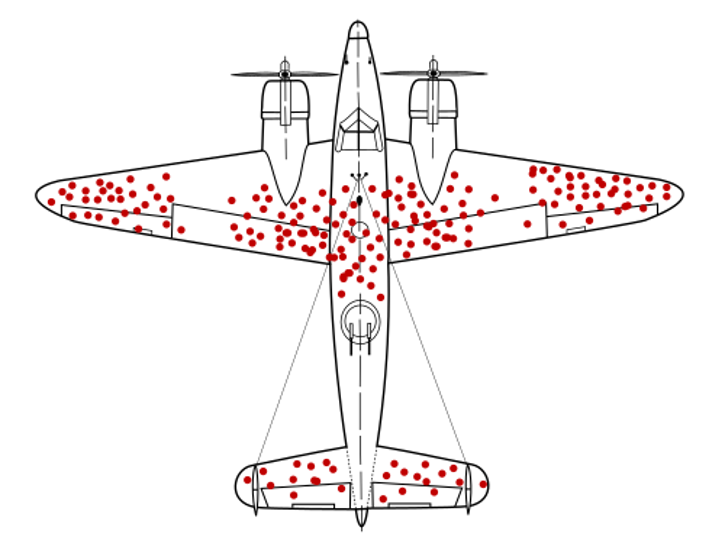
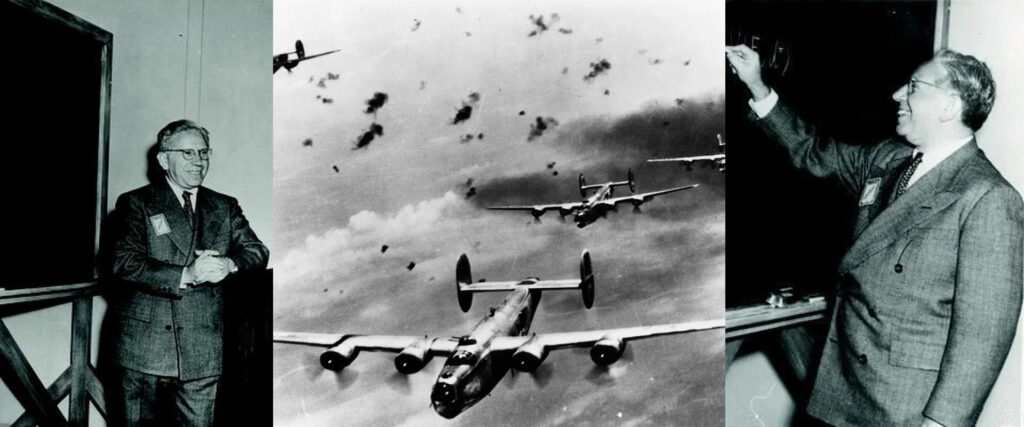
A statistician named Abraham Wald, working with the Statistical Research Group at Columbia, looked at the same data and reached the opposite conclusion. The planes in front of him were the ones that had made it home. Wherever they were covered in bullet holes, that was proof those areas could take a hit and still fly. The planes that told the real story – the ones hit in the engines or the cockpit – were sitting at the bottom of the North Sea. Wald’s advice was to armour the spots showing the *least* damage on returning aircraft, because those were the spots that, when hit, didn’t return at all.
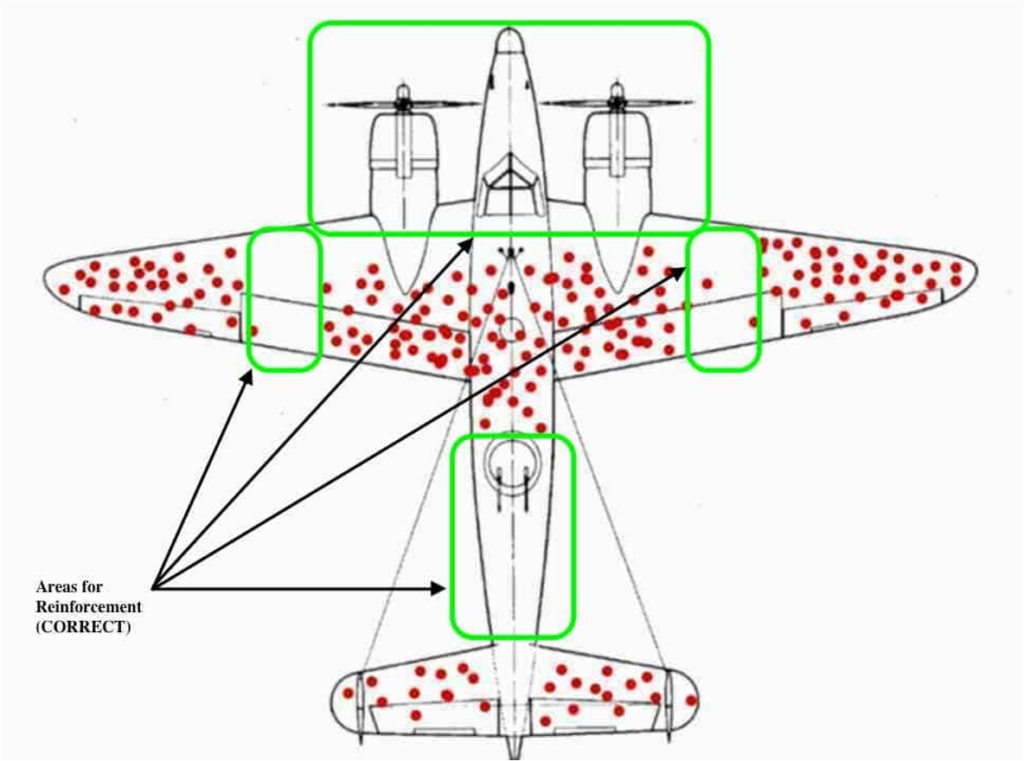
It’s become the textbook illustration of what statisticians call survivorship bias: the tendency to draw conclusions from the data that’s visible in front of us, while ignoring the data that isn’t there precisely because it didn’t survive to be counted. It’s worth saying that the anecdote itself has been polished over the decades — Wald’s own wartime memos don’t use the phrase and elements of it are more parable than transcript. But the underlying principle is sound, well documented and useful. And it’s a principle our industry should sit with for a moment.
The building that didn’t come home
On 14 June 2017, Grenfell Tower burned and 72 people died. It remains one of the defining tragedies in the history of UK building safety and the scrutiny that followed was entirely warranted. Combustible cladding, defective compartmentation, inadequate evacuation strategy and a regulatory system that had allowed all of it to happen were real, serious, systemic failures, and the response needed to be serious too.
Since then, the industry and process surrounding the design and construction of tall residential buildings has been transformed. The Building Safety Act, the creation of the Building Safety Regulator, the Gateway process, the second staircase requirement, PAS 9980, the ban on combustible materials in and on the external walls of higher-risk buildings — the list goes on. Anyone practising in residential fire engineering today is operating in a fundamentally different regulatory landscape to the one that existed in 2016 and largely for the better.
Fortunately, fire tragedies are rare. And whilst the industry has reacted to the Grenfell tragedy, we should still be asking two further uncomfortable questions:
- By studying only one example (high-rise residential), are we only protecting the engines and forgetting the cockpit?
- What other planes (i.e. buildings or construction types) are out there that might not make it home?
A modern high-rise residential building going through Gateway 2 today is, by any reasonable measure, one of the safest building types in the country. Sprinklers throughout. Non-combustible cladding and insulation systems. Robust compartmentation both tested and certified. In many cases, two protected staircases. A dedicated regulator scrutinising the design before a single spade goes into the ground and again before occupation. This is a building type receiving more design scrutiny, more third-party oversight and more layers of regulatory check than almost anything else in the built environment.
Using this anecdote, we have certainly protected one element of the plane.
And yet the volume of attention – political, regulatory and professional – being directed at this building type keeps increasing, even as its underlying risk profile keeps falling.
Where’s the plane we’re not looking at?
Survivorship bias doesn’t ask us to stop reinforcing the wings. It asks us to notice what isn’t in front of us. In fire safety terms, that means asking where the fatalities, near-misses and enforcement failures are occurring and whether our regulatory and professional attention is following the evidence, or following the last headline or political soundbite.
A few candidates worth naming, from experience:
Modern timber construction – A decade on from the height restrictions that followed early combustible-construction concerns, the industry still doesn’t have a settled, consistent answer for engineered timber’s fire performance. Whether that be an encapsulation strategy, the point at which exposed mass timber is deemed acceptable, compartment burnout behaviour, and the long-term durability of the protective systems relied on for protection. This is live, contested territory and it is being worked through building by building rather than resolved at a policy level, while residential concrete and steel frames absorb an ever-thicker layer of regulatory attention.
Light gauge steel frame (LGSF) construction – where the structure itself has effectively no fire resistance of its own and depends entirely on the boards and linings around it staying intact for the duration of the fire. The compartmentation is not just limiting fire spread in that scenario, it is the primary method of achieving structural integrity. Any degradation in that lining, whether through poor workmanship, service penetrations, wear and tear or age, removes the safety margin far faster than it would in a concrete or heavy steel frame, yet LGSF buildings do not attract anything like the scrutiny of a comparable residential tower.
Ageing hospital stock – much of it built or refurbished under PFI contracts in the 1990s and 2000s, where the commercial pressure to control lifecycle cost is well documented and where fire safety provisions (compartmentation, damper maintenance, cavity barriers) are exactly the sort of thing that is expensive and time consuming to do well and easy to under-specify, bodge or even ignore without it showing up until there’s a fire. These are buildings housing some of the least mobile, most vulnerable occupants in the country, many now twenty-plus years into a maintenance regime shaped by a contract structure built around cost control rather than fire safety outcomes.
Existing buildings below the higher-risk threshold – where cladding remediation has been slower, funding routes murkier, and scrutiny lighter, despite many sharing the same underlying construction-era defects as buildings that are now heavily regulated.
Other non-typical residential building types – care homes, hotels, houses in multiple occupation, purpose-built low-rise student accommodation. Where occupant vulnerability, sleeping risk, or management (in?)competence can be just as significant a factor as anything addressed by the new residential regime, but which sit outside its scope.
Existing buildings undergoing no works at all – where nobody is reviewing the fire strategy simply because there’s no trigger to do so. The building isn’t being touched, so it isn’t being looked at, however old its fire safety information or however out of step with current understanding of fire dynamics.
None of this is to say residential high-rise buildings should be scrutinised less. It’s to say that if we keep adding scrutiny to a building type whose risk is already falling, while other building types and existing stock receive comparatively little, we start optimising for visibility and politics rather than for outcomes.
We continue to reinforce the engine, but are we in danger of other planes not making it home because we are not looking at the cockpit?
What this means in practice
For a fire engineering consultancy, this isn’t an abstract point. It shapes where we think client and industry effort is best spent and it’s a conversation we regularly have with clients weighing where to direct fire safety budget across a portfolio: not simply “what does the newest regulation require?” but “where does the evidence say the risk actually sits?.”
That means resisting the pull toward compliance-by-headline and instead pushing for risk-based prioritisation across the whole building stock, both new and existing, residential and otherwise. It means being honest, in client conversations and in public commentary, when a building type has moved from high-risk to comparatively low-risk, even if the regulatory position hasn’t caught up.
And it means being willing to ask, of any given project or policy conversation, the same question Wald asked in 1943: what am I not looking at, and why? The problem is, politicians don’t want to ask those questions, because that doesn’t get you votes.
Grenfell demanded scrutiny and rightly got it. The task now is making sure that scrutiny keeps following the risk, not just the memory of where it was once found.
- Posted by Design Fire Consultants
- On 9th September 2026

0 Comments